Afrotroves started with a lookbook. Pages of ancient African artifacts—masks, sculptures—most of them stolen, most of them sitting in private collections that had no connection to the cultures that produced them. The collective had one instruction: no direction, no brief. Project your own story into the work.
I'm Urhobo. I grew up in Lagos. Those two facts had never fully spoken to each other until this project.
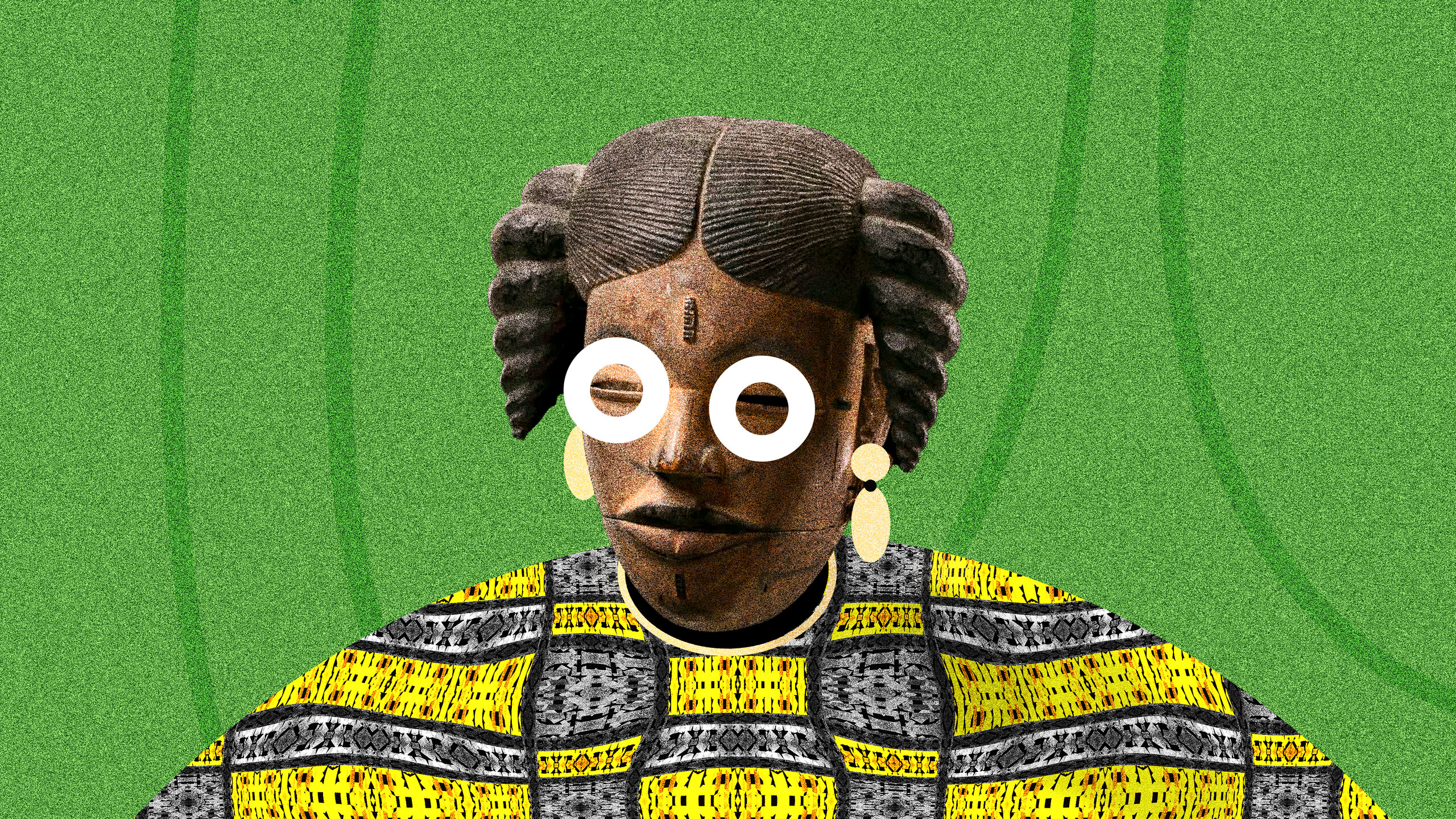
My first piece used a Congolese mask. I dressed it in the attire of Goodluck Jonathan—the black senator outfit, the flat-brimmed hat—a former Nigerian president from Bayelsa State, South South, close to my own origins. The South South sits along the Niger Delta, so I built the background around water. Aqua, teal, the blue-green of a river environment. The artifact wasn't Congolese anymore, and it wasn't a museum object either. It was wearing a specific political and cultural identity, in a landscape that belonged to it.
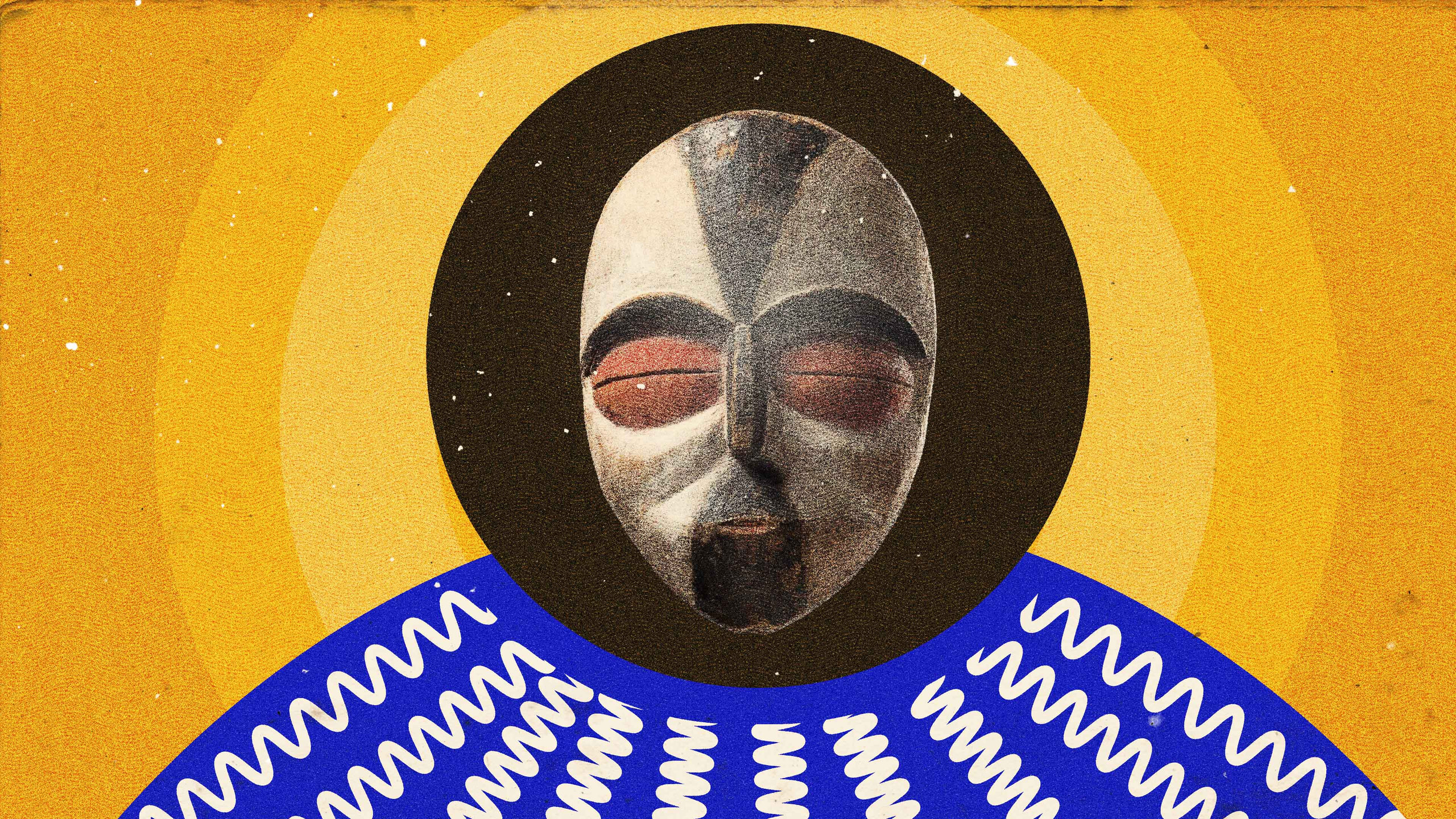
That logic carried through the rest of my pieces. The bubu and agbada—South South traditional silhouettes—became the framework. On some pieces I kept the Urhobo reference close. On others I borrowed from Igbo patterns, altered the geometry, let the cultural signal shift. It didn't matter to me where the original artifacts came from. A mask from Côte d'Ivoire could carry Cameroonian cloth. The point was accumulation: objects stripped of their context, getting new ones. Origin wasn't fixed, but it wasn't erased either.
The androgyny was deliberate. Once I moved away from the hat-and-specific-reference approach, I focused purely on the bubu silhouette—a garment that doesn't gender its wearer. The characters became ambiguous. The artifacts, already neither male nor female in their original form, stayed that way.
The collection was exhibited at Nairobi Design Week and covered by OkayAfrica. Artists from Nigeria, DR Congo, Cameroon, Côte d'Ivoire and Equatorial Guinea contributed pieces. I'd been working with masks this way before the project existed, and kept working with them after. Afrotroves was the moment it became collective.

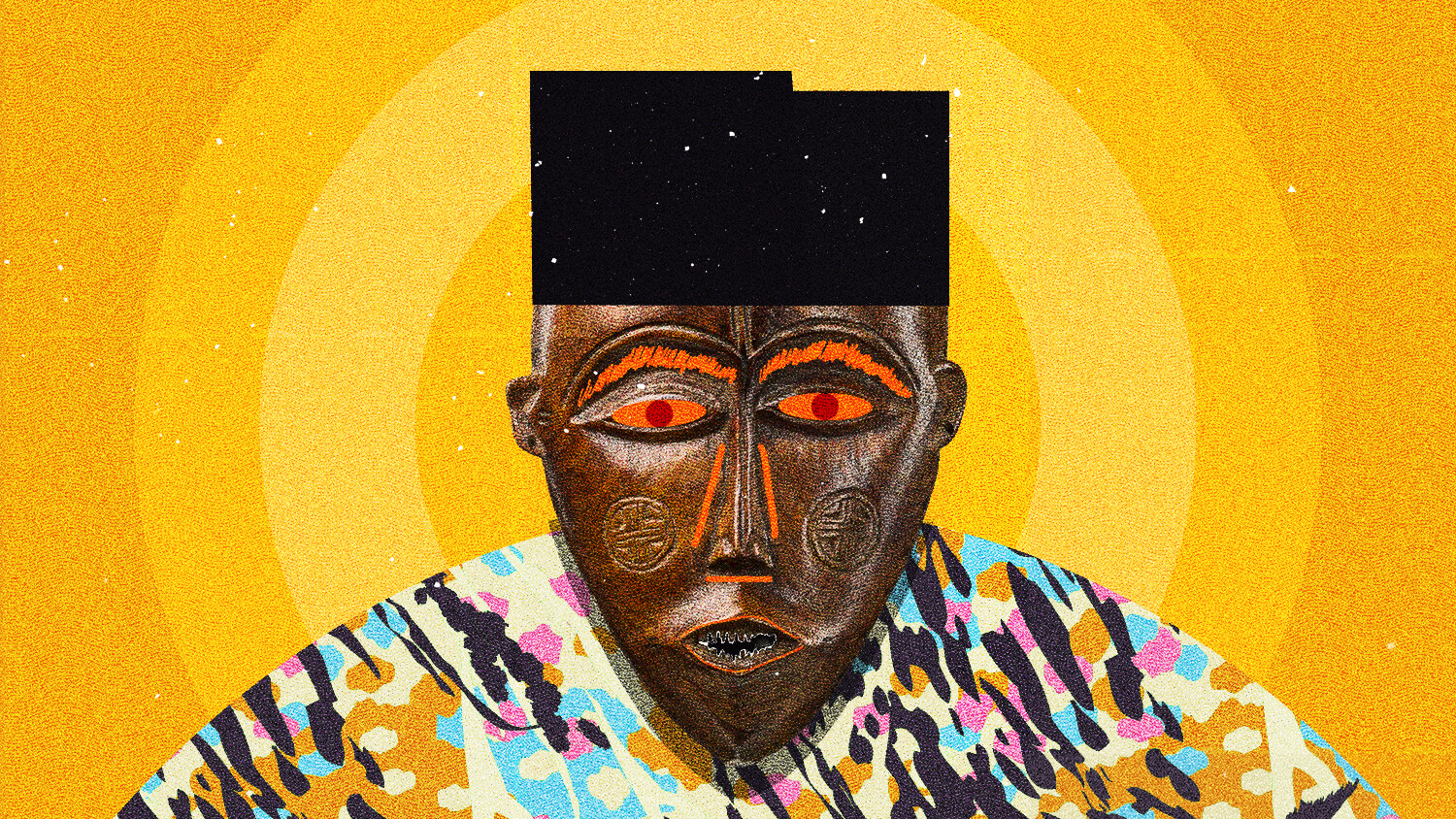
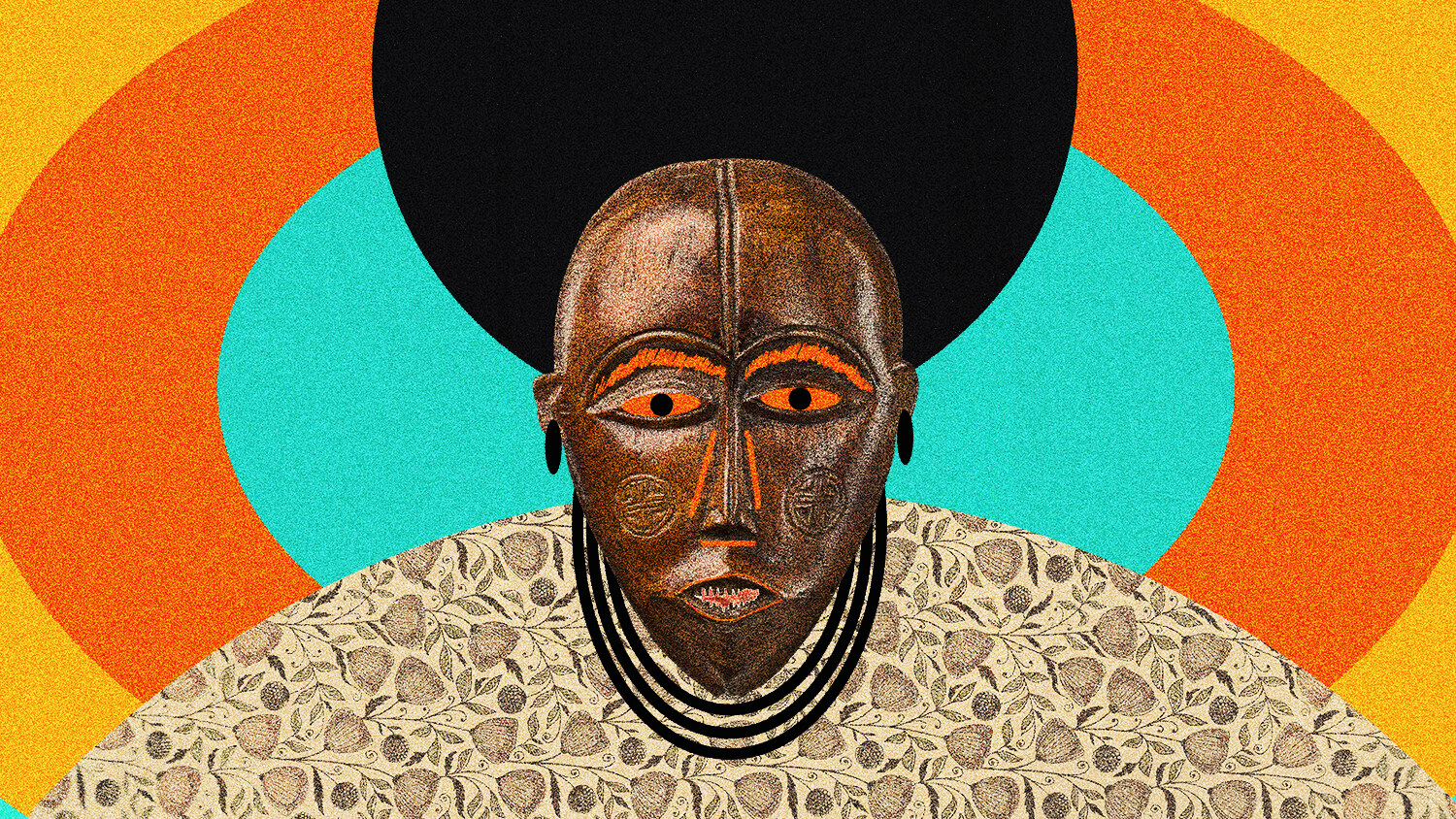
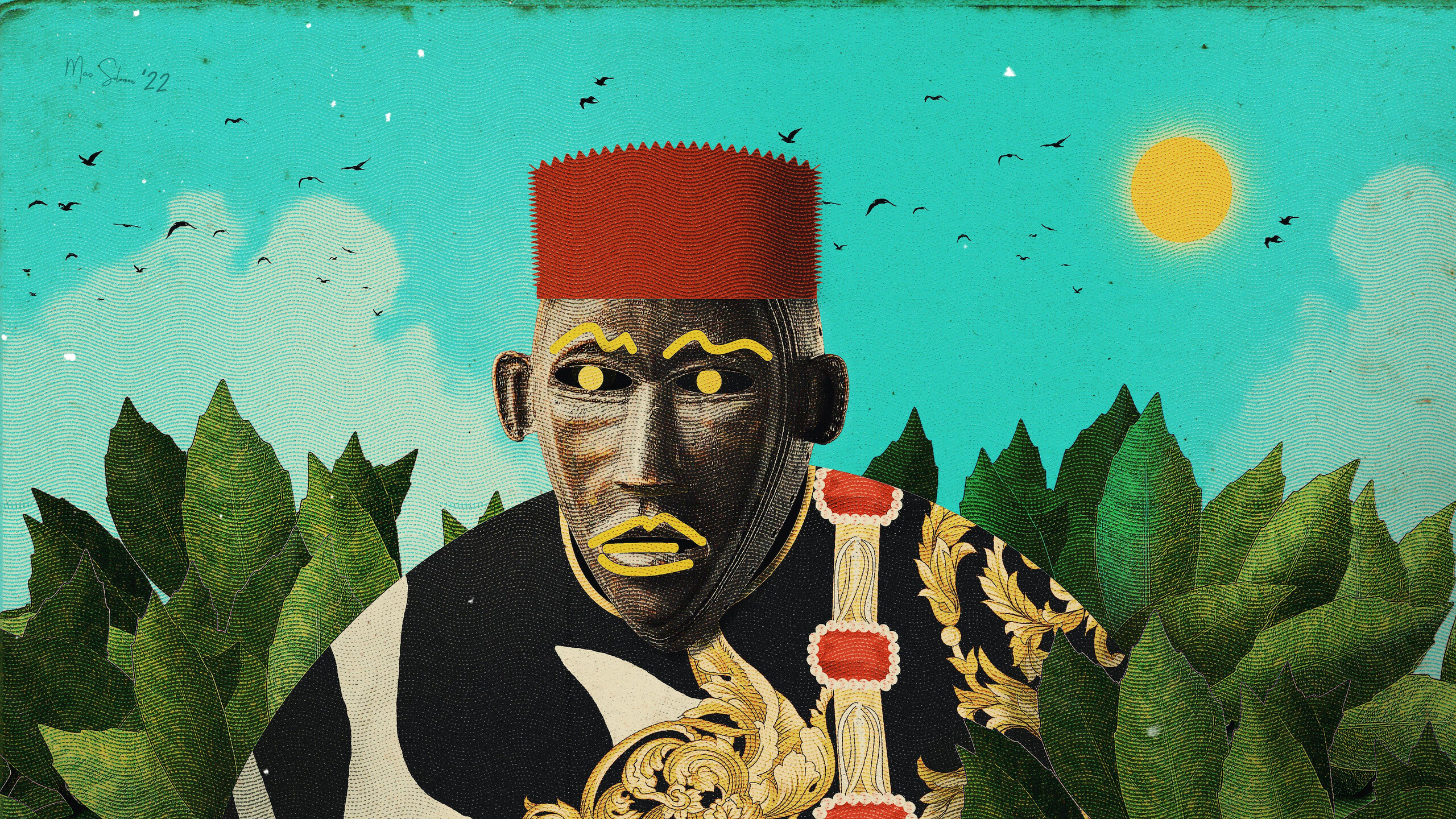
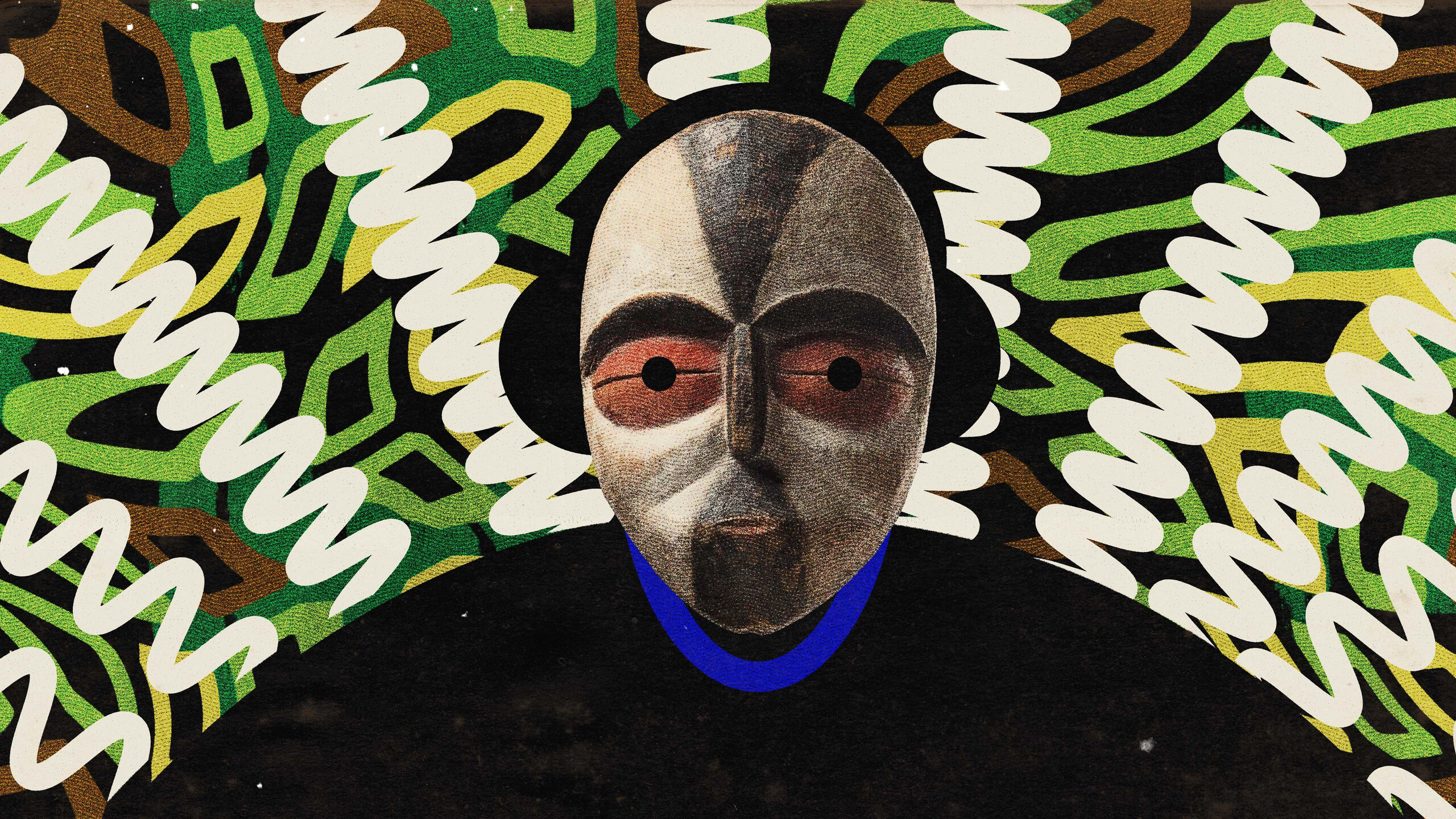
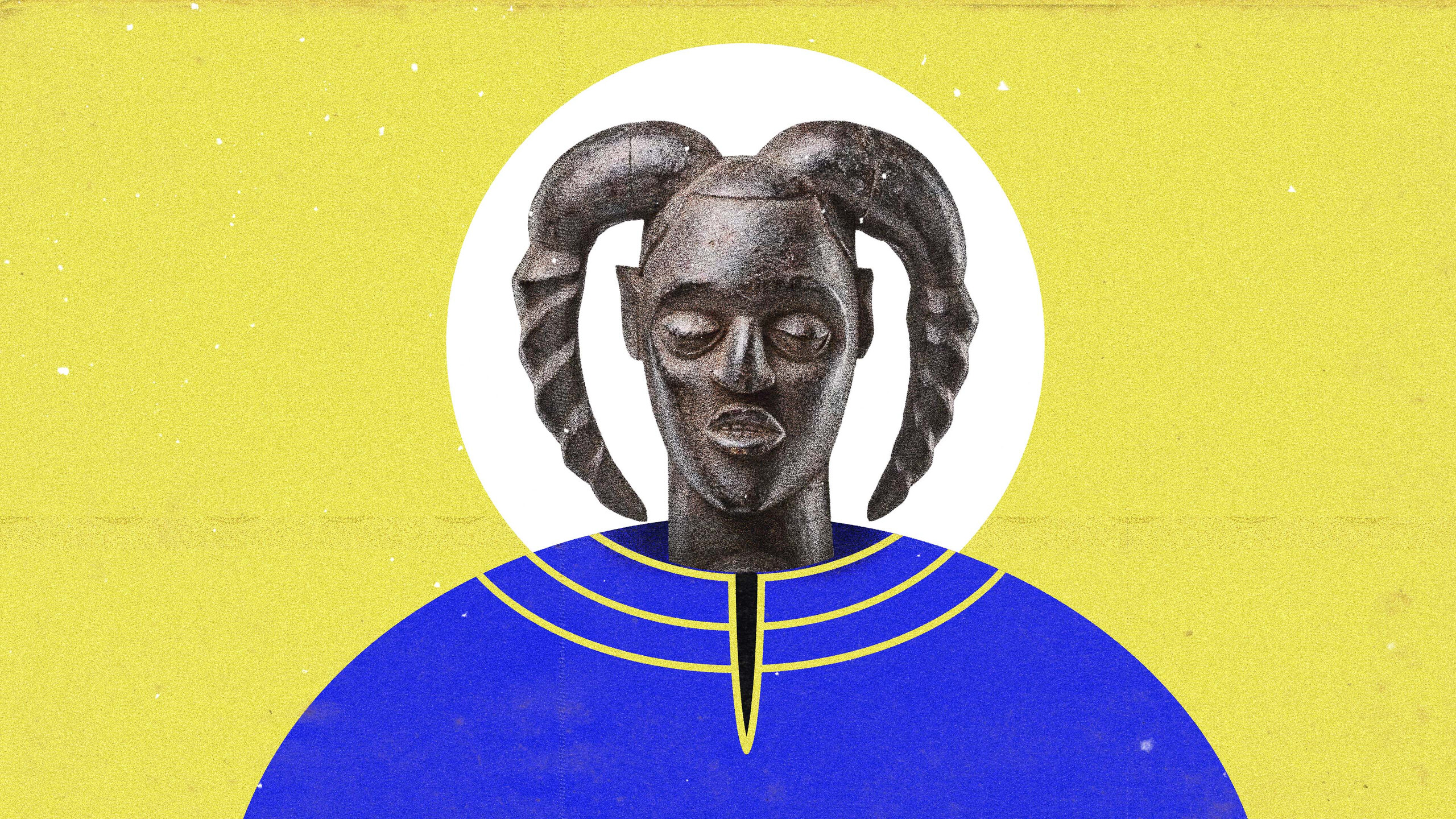
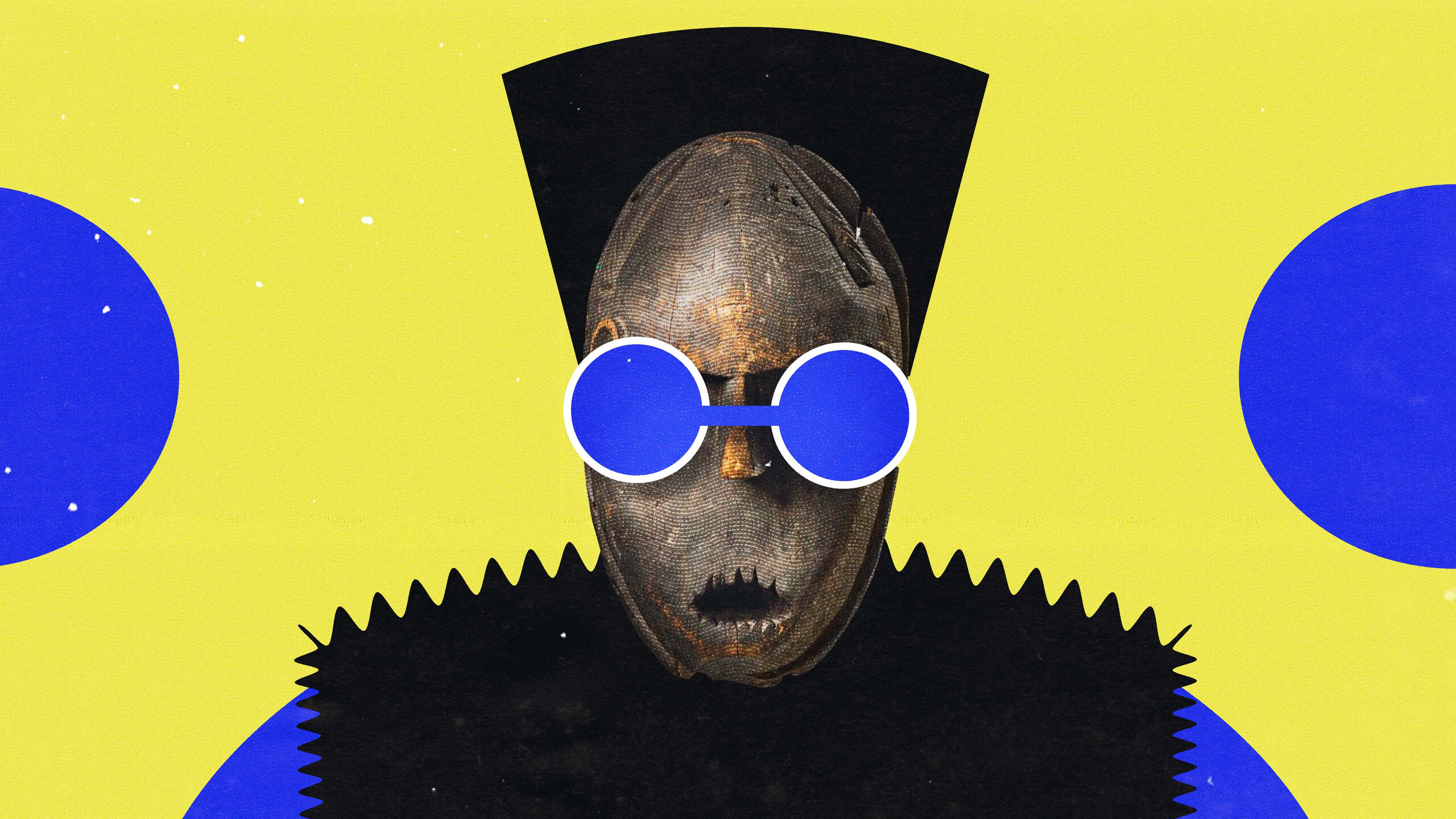
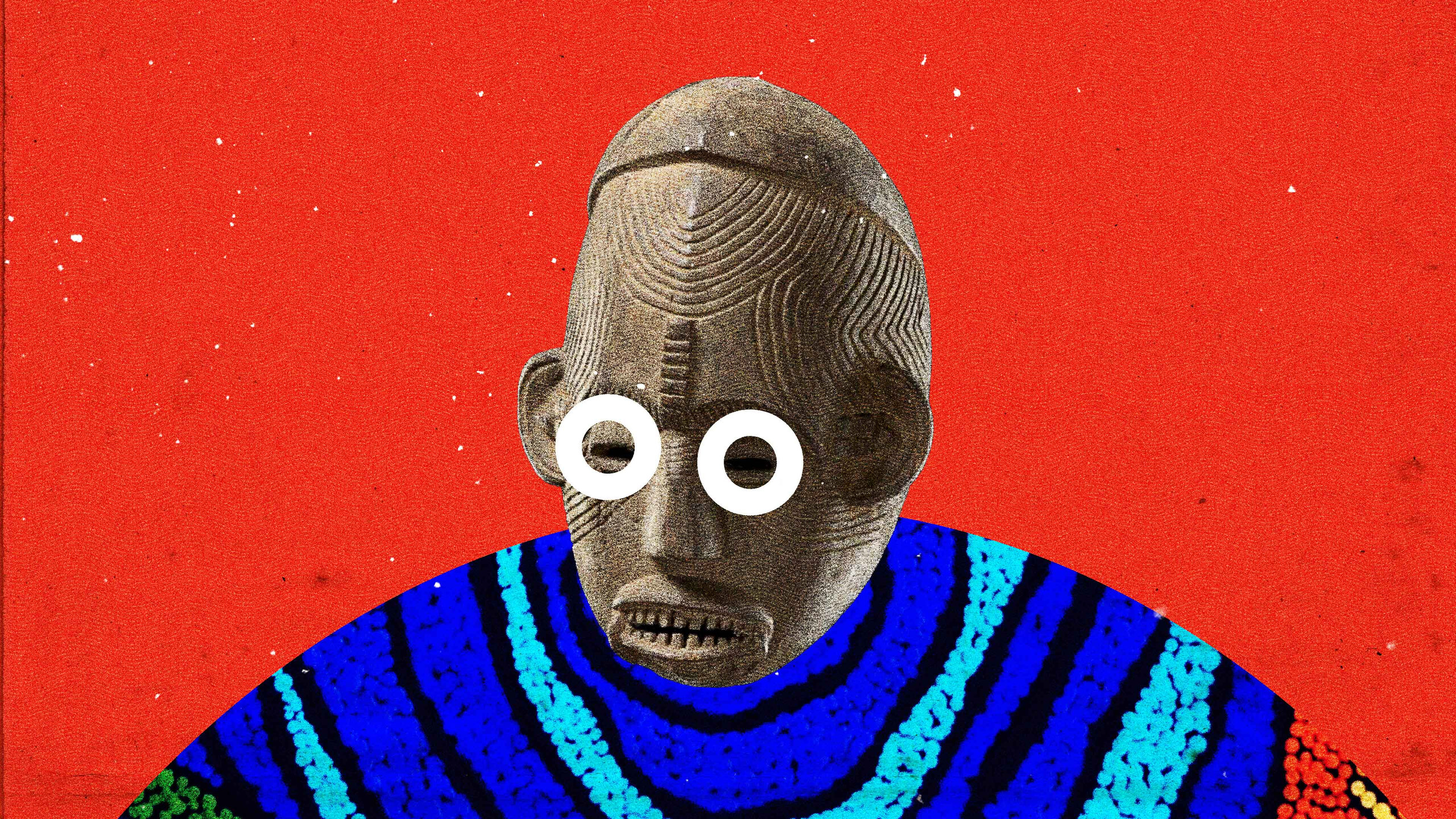
The Afrotroves characters, taken into physical form. The T-shirts were produced and distributed; the tote and phone cases remain concepts.
Exhibited at Nairobi Design Week
Covered by OkayAfrica